



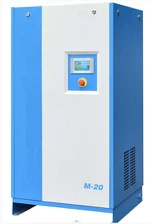

Screw Air Compressor
HighQ – Trusted Global Screw Compressor Manufacturer
HighQ has over 20 years of experience in designing, manufacturing, and delivering high-quality screw air compressors and integrated air-system solutions.
High-End German Air-End Cooperation
We partner with leading German air-end manufacturers to ensure high compression efficiency, long service life, and stable output performance.
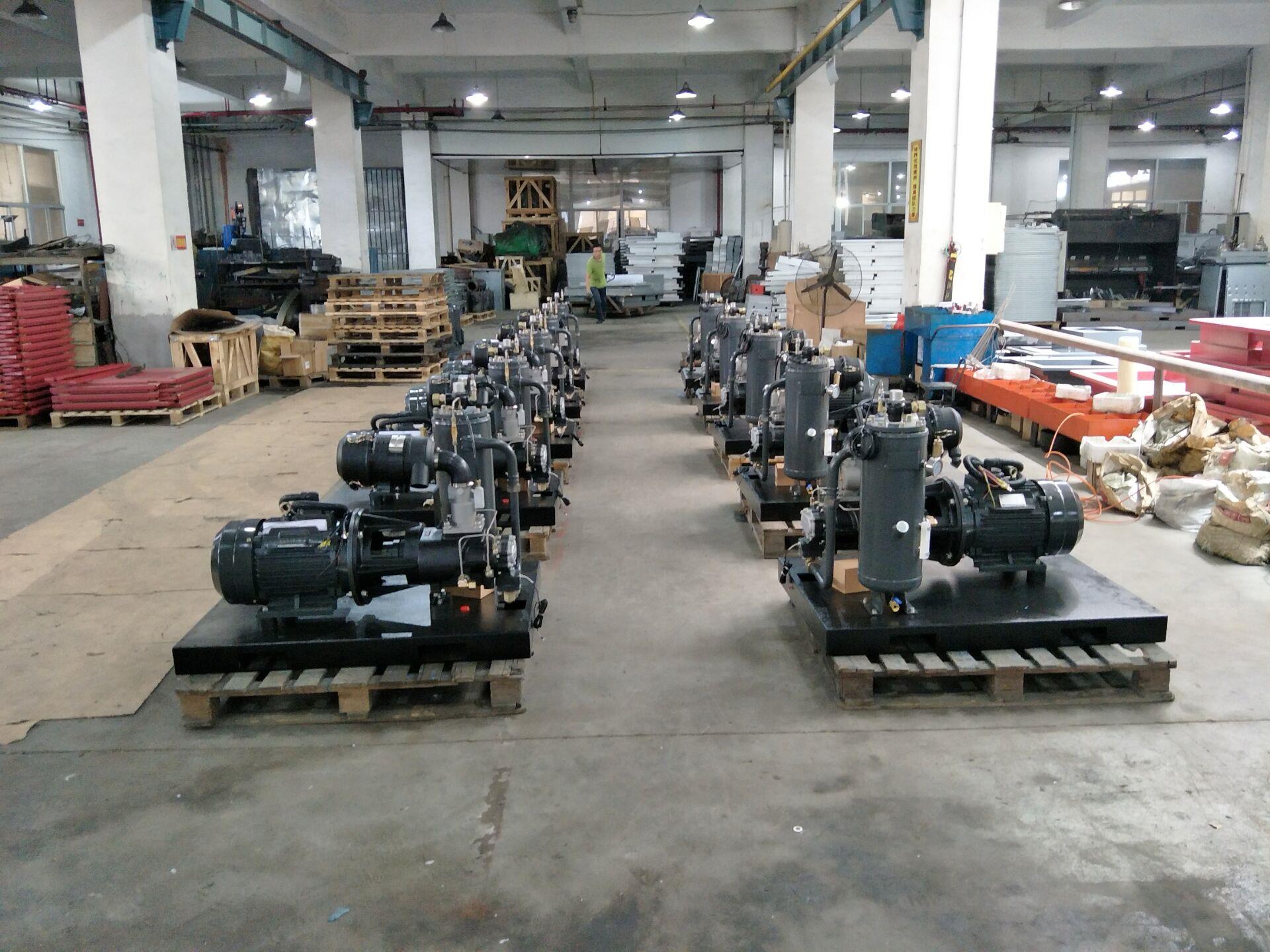
Advanced Automated Manufacturing & QC
Our production lines integrate automated machining, precision assembly, and multi-stage testing to guarantee consistent quality and reliability.
Experienced R&D and Engineering Team
Over 20 years of engineering know-how enables us to design efficient, quiet, and durable compressors tailored for diverse industrial applications.
One-Stop Compressed Air System Solutions
We offer complete compressed air systems including compressors, dryers, filters, tanks, and accessories to simplify procurement and integration.


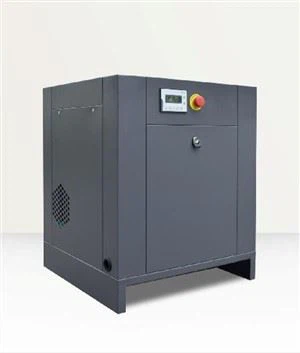
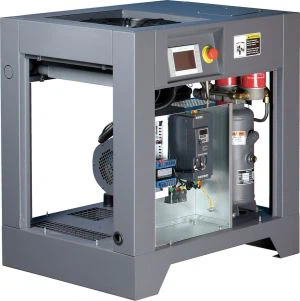
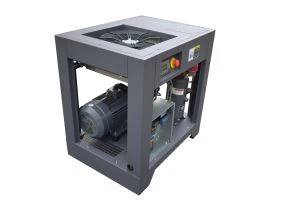

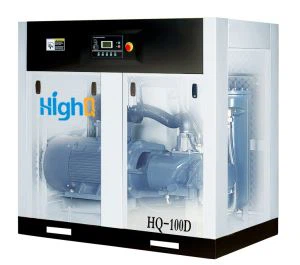


Understanding the Screw Air Compressor
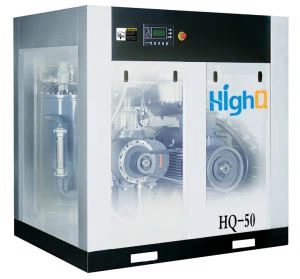
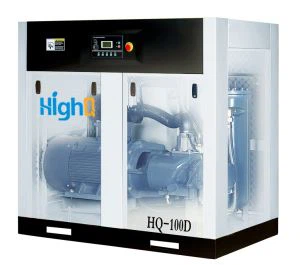
A screw air compressor uses a pair of intermeshing rotors—male and female—to compress air continuously. Unlike piston compressors that rely on reciprocating motion, screw technology creates a smooth, pulse-free flow of compressed air. This continuous compression makes the machine highly suitable for demanding industrial environments, especially those requiring stable air pressure, such as CNC machining, automated assembly lines, and painting applications.
One of the major reasons screw compressors dominate modern manufacturing is their ability to operate continuously without overheating or experiencing significant wear. The airend is built with precision-engineered rotors and high-quality bearings, ensuring low friction, high durability, and prolonged lifespan. As industries increasingly shift toward uninterrupted production schedules, screw compressors provide the reliability necessary for maintaining consistent output.
The integrated cooling system—including oil coolers and aftercoolers—maintains stable temperature even under heavy load. Efficient heat dissipation prevents system failures caused by high temperature, reduces maintenance cost, and ensures consistent air delivery. This makes screw compressors ideal for regions with hot climates or workshops with limited ventilation.
Modern screw air compressors are equipped with PLC intelligent controllers that monitor pressure, temperature, motor load, and operational status in real time. These smart systems prevent overload, overheating, and pressure imbalance, improving safety. Optional remote monitoring further supports predictive maintenance, reducing downtime and improving operational efficiency.
Key Advantages of Screw Air Compressors
Stable & Non-Pulsating Airflow
Screw air compressors deliver constant airflow without pressure fluctuations. This stability is essential for precision manufacturing processes, automated tools, robotic systems, and pneumatic devices requiring clean, continuous air. The absence of pulsation also reduces vibration and protects downstream equipment, extending service life.
Superior Energy Efficiency
Screw compressors operate with high volumetric efficiency, maximizing air output while minimizing energy consumption. When equipped with a Variable Speed Drive (VSD), the compressor adjusts motor speed based on real-time air demand. This saves significant energy during low-load periods and can reduce electricity consumption by 20–35%—a major advantage for industries with fluctuating air usage patterns.
Long Service Life & Reduced Maintenance
The airend—the core of the compressor—is engineered using advanced rotor profiles, high-precision machining, and optimized oil injection. This ensures exceptional durability and minimal internal wear. With fewer moving components than piston compressors, screw compressors require less maintenance and experience fewer mechanical failures.
Low Noise & Minimal Vibration
Most screw compressors operate within 60–75 dB due to their sound-insulated cabinet and smooth rotary motion. This makes them suitable for indoor installations, including workshops with limited space. The reduced vibration also lowers fatigue on internal components, prolonging machine lifespan.
Unique Features of Screw Air Compressors
Screw air compressors incorporate several advanced engineering features that position them as high-performance compressed air solutions. The rotary screw air-end—machined to micron-level precision—ensures efficient and continuous compression with minimal internal leakage. High-quality bearings, optimized rotor profiles, and precision balancing deliver stable performance even under heavy load or extended use.
High-Precision Screw Airend
The airend features rotors made using CNC grinding and high-accuracy measurement systems. The optimized rotor profile reduces leakage, improves compression efficiency, and ensures stable air output. High-strength materials and heavy-duty bearings allow the airend to operate reliably for tens of thousands of hours.
Intelligent Control Platform
Modern screw compressors are equipped with user-friendly PLC controllers featuring touchscreen interfaces, operational logs, multi-language settings, and real-time system monitoring. The unit automatically triggers alarms for overpressure, overheating, and abnormal load, preventing damage and ensuring safe operation.
Integrated Cooling and Filtration System
The machine includes an efficient oil cooler and aftercooler that maintain stable temperature while removing heat from compressed air. High-efficiency filters and oil-air separators minimize oil carry-over, protect downstream equipment, and improve air purity.
Modular & Space-Saving Design
Many models offer integrated configurations with built-in air dryers, air tanks, and filtration stages. This compact layout reduces installation footprint, minimizes piping work, and simplifies maintenance. It is ideal for workshops and factories with limited space.
Where Screw Air Compressors Are Used

CNC Machining & Metal Fabrication
Screw air compressors are essential in metal processing factories for powering CNC machines, milling tools, cutting systems, and pneumatic clamps. Stable airflow ensures precision machining accuracy, smoother operation, and consistent product finishing. Their continuous duty capability supports high-volume production.

Automotive Repair & Tire Service
In automotive workshops, screw compressors power pneumatic tools such as impact wrenches, sprayers, lifts, and cleaning systems. Their low noise and compact design allow installation inside the workshop without disturbing mechanics. Clean air delivery ensures flawless car painting and detailing.
Electronics & Semiconductor Assembly
Electronics manufacturing requires highly stable and clean compressed air for circuit board assembly, chip packaging, soldering tools, and pick-and-place machines. Low-oil, low-moisture compressed air prevents component contamination and ensures product reliability.

Food & Beverage Processing
Oil-free screw compressors provide contamination-free compressed air for packaging, filling, cleaning, and conveying systems. Their ISO Class 0 purity ensures product safety and meets strict hygiene regulations.
Product Types
Screw air compressors come in various configurations designed to meet different industrial requirements, energy-consumption goals, and installation conditions. The two primary classifications are fixed-speed compressors and variable-speed (VSD) compressors, each suited for specific operational environments.

Fixed-speed compressors
Fixed-speed compressors operate at a constant motor RPM, providing steady and reliable airflow for facilities with stable, predictable air demand. They are simple, durable, and cost-effective, making them ideal for manufacturing lines, woodworking shops, and continuous-process applications where air consumption remains relatively consistent throughout the day.
Variable-speed screw compressors
Variable-speed screw compressors, on the other hand, adjust their motor speed in real time to match actual air demand. This allows them to significantly reduce power consumption—often by 30–60%—and eliminates energy waste caused by idling and unload cycles. VSD compressors are highly beneficial for factories with fluctuating workloads, such as packaging plants, CNC machining centers, textile manufacturing, and mixed-production environments. Their precise airflow control also extends equipment lifespan and reduces system wear.

Main Components of a Screw Air Compressor
1. Screw Airend
The airend is the core component responsible for compressing air. It consists of male and female rotors precisely crafted to maintain tight clearances. As the rotors turn, air is trapped and compressed smoothly. The airend determines the efficiency, noise level, and lifespan of the compressor.
2. Electric Motor
Typically equipped with IE3 or IE4 high-efficiency motors, the motor drives the airend at stable speed. VSD models use inverter-controlled motors that adjust RPM according to actual air demand. The motor is engineered to handle continuous operation without overheating.
3. Cooling System
The cooling system includes oil coolers, aftercoolers, and cooling fans. These components remove heat generated during compression, ensuring stable operation. Efficient cooling reduces oil oxidation and prolongs the lifespan of bearings and seals.
4. Filtration and Separation System
Air filters remove dust and impurities before air enters the airend. Oil filters and oil-air separators ensure clean air output with minimal oil carryover. The multi-stage filtration system protects both the compressor and downstream pneumatic tools.
5. Lubrication System
The lubricating oil provides cooling, sealing, and friction reduction. High-quality synthetic oil extends maintenance intervals and enhances compressor reliability. The lubrication system is essential for maintaining tight rotor clearances and preventing metal contact.
6. Intelligent Control Panel
Equipped with a PLC touchscreen, the control system displays pressure, temperature, load, and running hours. Users can schedule maintenance, monitor alarms, and connect remote management modules. The controller ensures safe and stable operation.

Comprehensive FAQ for Screw Air Compressors
1. What is the ideal working environment for a screw air compressor?
A screw air compressor should be installed in a ventilated, clean, and moderately cool area. Although screw compressors can handle higher temperatures than piston compressors, proper airflow prevents overheating and ensures energy efficiency. Avoid sealing the compressor in tight spaces without ventilation.
2. How do I choose between fixed-speed and VSD models?
If your air demand is stable throughout the day, a fixed-speed compressor is cost-effective and reliable. For facilities with fluctuating air consumption—such as production lines that start and stop frequently—a VSD screw compressor is the best option, as it reduces energy waste and improves system efficiency.
3. How much maintenance does a screw compressor require?
Routine maintenance is relatively simple. Air filters should be replaced every 1,000 hours, oil filters every 2,000–3,000 hours, and oil separators every 4,000–6,000 hours. Lubricating oil changes depend on usage but typically occur every 3,000–6,000 hours. Regular inspections help ensure long-term stability.
4. What is the expected service life of the airend?
A high-quality screw airend typically lasts 20,000–40,000 working hours, depending on operating conditions and maintenance frequency. Proper lubrication, cooling, and filtration significantly extend its lifespan.
5. Why is a screw compressor quieter than a piston compressor?
The rotary motion of the screw rotors generates minimal vibration compared to the reciprocating motion of pistons. The enclosed soundproof cabinet further reduces noise, making screw compressors ideal for indoor installations.
6. Can screw air compressors operate continuously?
Yes. Screw compressors are specifically designed for 24/7 operation. Their cooling, lubrication, and structural systems support long working hours without the risk of overheating or excessive wear.
7. Do screw compressors produce clean air?
With efficient filtration and oil separation, screw compressors deliver clean and stable compressed air. For industries requiring completely oil-free air, dedicated oil-free screw models are available.
8. What warranty is typically offered?
HighQ provides extended warranty coverage for the airend and motor, along with comprehensive technical support for the controller, sensors, and structural components. Warranty terms can be customized based on project requirements.
9. How should I determine the correct compressor size?
Selection depends on airflow demand (CFM), working pressure (bar/psi), duty cycle, installation space, and voltage requirements. Providing this information allows the engineering team to recommend a model that matches your application needs.